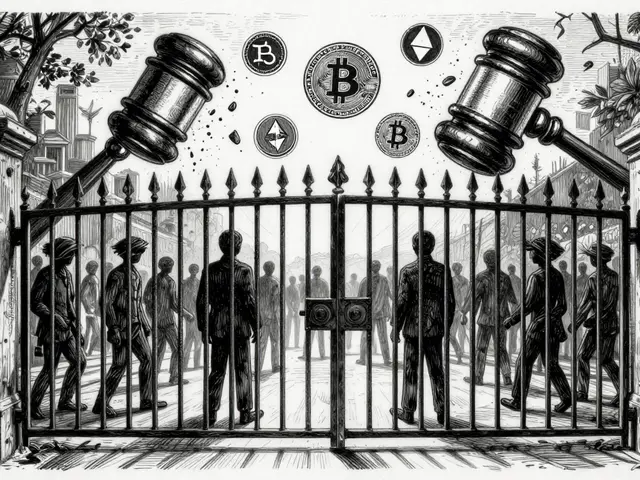
Imagine buying a Bitcoin with your hard-earned Taka, only to find out that technically, you might not have broken the law-but you definitely broke the bank’s rules. That is the confusing reality for anyone touching digital assets in Bangladesh today. While headlines scream about strict bans and police raids, the legal foundation of these restrictions rests on a piece of legislation from 1947. It sounds like a plot hole in a time-travel movie, but it is the actual state of cryptocurrency regulation in the country.
If you are an investor, a developer, or just someone curious about why your friend got his card declined while buying Ethereum, you need to understand the gap between what the government says and what the law actually defines. The Foreign Exchange Regulations Act (FERA) of 1947 is the backbone of this prohibition, yet its application to digital coins is legally shaky at best. This article breaks down why the ban exists, where the legal cracks are, and how people still trade in the shadows.
The Core Problem: A 1947 Law Trying to Catch Digital Coins
To understand the restriction, you have to look at the source. The Bangladesh Bank, the central banking authority, has maintained a strict prohibition on cryptocurrency since 2017. They cite risks like money laundering, terrorism financing, and financial instability. But here is the kicker: they base this ban on the Foreign Exchange Regulations Act of 1947.
This act was written when the world ran on paper notes and telegrams. Section 2(b) of FERA defines "currency" in two ways:
- All currency notes, postal orders, cheques, drafts, travelers' cheques, letters of credit, bills of exchange, and promissory notes.
- Any other instrument that the Bangladesh Bank declares to be currency via a notification in the official Gazette.
Bitcoin does not fit into category one. It is not a cheque or a promissory note. And crucially, the Bangladesh Bank has never issued the specific statutory notification required under category two to formally declare cryptocurrency as "currency." Legal experts argue that without this notification, the statutory basis for criminal prosecution under FERA is questionable. You are being warned, but are you actually breaking the letter of the law? That is the million-dollar question.
Why the Ban Exists Despite Legal Ambiguity
If the law is vague, why the hard stance? The answer lies in risk management rather than pure legal clarity. The Bangladesh Bank views cryptocurrencies through the lens of economic stability. In a developing economy with challenges in informal financial systems, decentralized assets pose a threat to monetary control. If citizens can bypass traditional banking channels to move value, the central bank loses leverage over inflation and capital flight.
The prohibition isn't just about trading; it extends to possession within the financial system. Banks are instructed to block transactions related to crypto exchanges. If you try to send money to Binance or KuCoin using a local debit card, the transaction often gets flagged or reversed. This creates a chilling effect. Even if you aren't going to jail, you lose access to the formal banking infrastructure needed to easily enter or exit the market.
Consider the Anti-Money Laundering Act (AMLA). It defines foreign currency by referencing FERA. Because FERA doesn't clearly include crypto, AMLA enforcement against crypto-specific laundering faces similar definitional hurdles. Yet, regulators use these tools aggressively to freeze accounts suspected of facilitating large-scale underground crypto trades.
The Tax Paradox: Illegal to Trade, Taxable to Profit?
Here is where things get really weird. The National Board of Revenue (NBR) manages taxation in Bangladesh. As of 2025, there is no specific crypto tax regime. However, all income falls under the general Income Tax Ordinance of 1984.
The NBR treats cryptocurrencies as property. This means if you sell a coin for a profit, that gain is potentially subject to capital gains tax. Think about the logic: The government says you shouldn't be holding this asset because it's risky and unregulated. But if you do hold it and make money, they want their cut. It creates a paradoxical situation where the state prohibits the activity but claims revenue from the outcome. There is no clear guidance on how to report these gains, leaving taxpayers guessing whether to declare them as business income, capital gains, or something else entirely.
| Country | Regulatory Stance | Key Legislation/Body | Tax Implication |
|---|---|---|---|
| Bangladesh | Prohibited | Foreign Exchange Regulations Act (1947) | Taxed as property/capital gains (general laws) |
| Pakistan | Regulated Framework Emerging | Pakistan Digital Assets Authority (PDAA) | Developing specific framework |
| India | Legal but Heavily Taxed | FEMA / Income Tax Act | 30% tax on profits + 1% TDS |
This comparison highlights Bangladesh's isolation. While India generates billions in tax revenue from crypto despite high taxes, and Pakistan is actively building institutions like the PDAA to regulate exchanges and mining, Bangladesh remains stuck in a prohibitive mode based on outdated definitions.
How the Underground Market Survives
Does the ban stop people from trading? Not really. An underground market thrives. How? Through ingenuity and technical loopholes. Major platforms like Binance and KuCoin remain accessible via mobile app stores. The barrier isn't downloading the app; it's funding the account.
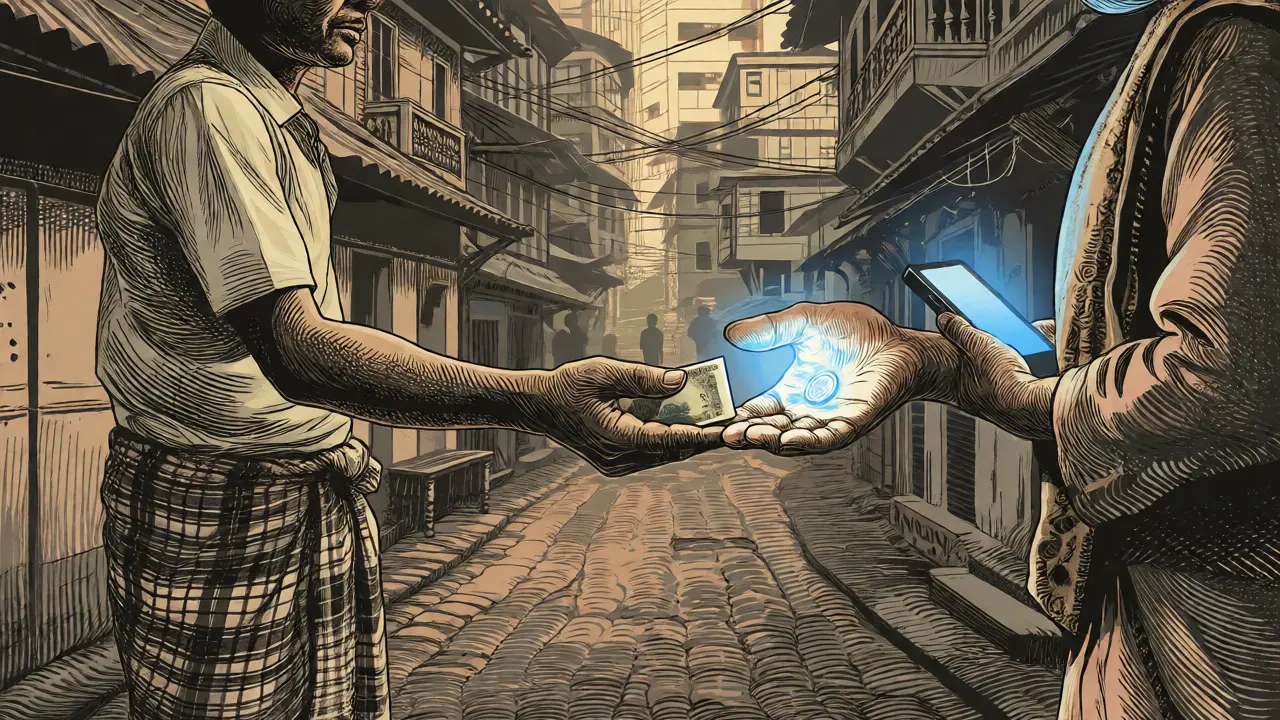
Since direct bank transfers are blocked, users rely on Peer-to-Peer (P2P) networks and local agents. These agents act as informal exchange houses. You give them Bangladeshi Taka in cash or via a personal bank transfer, and they send you USDT or BTC to your wallet. They take a small commission for the hassle and the risk. This system allows individuals to bypass official restrictions while maintaining plausible deniability. Your bank sees a transfer to a friend named "Rahim," not a payment to a crypto exchange.
Enforcement agencies try to track this by monitoring credit and debit card transactions denominated in US dollars. If they see repeated payments to known crypto merchant codes, they flag the account. But cash-based P2P deals are nearly invisible to the banking system. This resilience suggests that demand for digital assets persists regardless of official policy.
Expert Opinions and Future Outlook
Is the current approach working? Many experts say no. Dr. B M Mainul Hossain, a professor at Dhaka University, has publicly stated that banning cryptocurrency is ineffective. The academic consensus leans toward regulation over prohibition. Prohibition drives activity underground, making it harder to monitor for money laundering-the very thing the ban aims to prevent.
Looking ahead, the regulatory environment is uncertain. Government officials maintain restrictive positions but acknowledge the need for clearer frameworks. The NBR is reportedly considering updates that might provide specific guidelines. Until then, investors face a landscape of ambiguity. Will the government amend FERA to explicitly include crypto? Or will they create a new law entirely? Neither path is guaranteed, and the delay costs Bangladesh potential participation in the global digital asset economy.
For now, if you choose to engage with crypto in Bangladesh, you operate in a gray zone. You are likely safe from immediate arrest for small-scale personal holdings, but you risk having your banking services restricted. The legal foundation is weak, but the administrative power of the Bangladesh Bank is strong. Understanding this distinction is key to navigating the market safely.
Is cryptocurrency completely illegal in Bangladesh?
Technically, the possession and trading are prohibited by the Bangladesh Bank under the Foreign Exchange Regulations Act of 1947. However, legal experts argue that the Act does not explicitly define cryptocurrency as "currency," creating a legal gray area. While you won't typically face criminal charges for holding small amounts personally, banks block transactions, and large-scale commercial trading faces significant regulatory pressure.
Can I use my Bangladeshi debit card to buy Bitcoin?
Direct purchases using a Bangladeshi debit or credit card on international exchanges are usually blocked or reversed. Banks monitor transactions linked to known crypto merchants and flag them. Most traders use Peer-to-Peer (P2P) methods, transferring Taka directly to another user's bank account in exchange for crypto sent to their wallet.
Do I have to pay tax on crypto profits in Bangladesh?
Yes, potentially. Although there is no specific crypto tax law, the National Board of Revenue (NBR) treats cryptocurrencies as property. Profits from selling crypto may be subject to capital gains tax under the Income Tax Ordinance of 1984. Since reporting guidelines are unclear, many investors consult tax professionals to determine how to declare these earnings.
Why does Bangladesh ban crypto while neighbors regulate it?
Bangladesh cites concerns about money laundering, terrorism financing, and financial instability. The country's developing economy relies heavily on traditional banking controls. Regulators fear that decentralized assets could undermine the Taka and allow capital to flow out of the country without oversight, unlike in India or Pakistan which are establishing structured regulatory frameworks.
What happens if my bank freezes my account for crypto activity?
If your account is frozen, you must contact the bank immediately to explain the nature of the transactions. Often, providing proof that the funds were used for legitimate purposes (even if crypto-related) can help. However, repeated violations of banking directives regarding foreign exchange can lead to stricter scrutiny or permanent closure of the account for retail customers.