
Imagine two different documents - one a legitimate contract, the other a fake - that somehow produce the exact same digital fingerprint. That’s a hash collision. In the world of blockchain, where every transaction is locked in place by these digital fingerprints, a collision isn’t just a technical glitch. It’s a potential disaster.
What Exactly Is a Hash Collision?
A hash function takes any input - a sentence, a file, a Bitcoin transaction - and turns it into a fixed-length string of characters. For Bitcoin, that’s a 64-character hexadecimal code generated by SHA-256. It’s designed to be unique. Change one letter in the input, and the output should look completely different. A hash collision happens when two completely different inputs somehow result in the same output. It’s like two different keys opening the same lock. Mathematically, it’s inevitable. There are infinite possible inputs but only a finite number of possible outputs. That’s the pigeonhole principle: if you have more pigeons than holes, at least two pigeons share a hole. The real question isn’t whether collisions exist - they do. It’s whether they’re practical to find.Why Hash Collisions Break Blockchain
Blockchain security relies on three core ideas: immutability, integrity, and trust. Every block in the chain contains the hash of the previous block. If someone tries to alter a transaction in Block 100, the hash of Block 100 changes. That breaks the link to Block 101, which then breaks Block 102, and so on. The whole chain falls apart - and the network notices. But if a hash collision exists, an attacker could replace a transaction with a different one that produces the same hash. Block 100’s hash stays the same. The chain looks untouched. The network sees no break. The fake transaction gets accepted as real. That’s how double-spending attacks become possible. You spend your Bitcoin once, then use a collision to make it look like you never spent it. The network thinks you still have the coins. You spend them again. And again. This isn’t theoretical. It’s happened before - just not on Bitcoin.MD5 and SHA-1: The Collisions That Shook Cryptography
In 2004, researchers showed MD5 could be broken. By 2008, attackers used MD5 collisions to forge SSL certificates - the same ones that secure your banking site. Websites thought they were talking to a trusted server. They weren’t. SHA-1, once the gold standard, followed. In 2017, Google’s SHAttered attack created two different PDF files with identical SHA-1 hashes. One was a harmless document. The other was a malicious one. The hash matched. The system couldn’t tell the difference. Both algorithms were officially retired. But they live on in legacy systems. And that’s the danger: if a system still uses SHA-1 or MD5, it’s already compromised.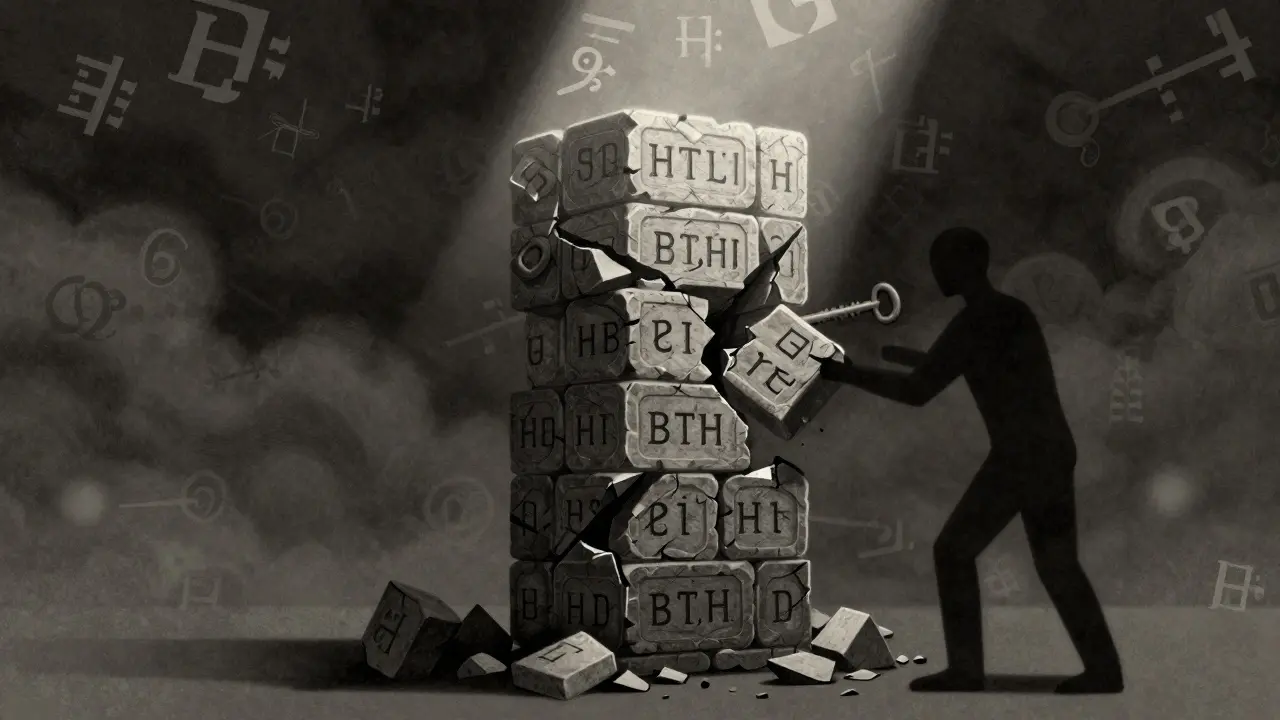
Why SHA-256 Is Still Safe - For Now
Bitcoin uses SHA-256. It’s not perfect, but it’s currently unbreakable in practice. The output space is 2^256 possible hashes. That’s more than the number of atoms in the observable universe. To find a collision by brute force, you’d need to try roughly 2^128 attempts. Even if every computer on Earth worked together for a thousand years, you wouldn’t get close. SHA-256 also has strong avalanche effect: change one bit in the input, and about half the bits in the output flip. That makes it nearly impossible to tweak an input to hit a target hash. So Bitcoin’s chain is safe - not because it’s mathematically impossible to collide, but because it’s computationally impossible with today’s technology.Where Hash Collisions Are Still a Real Threat
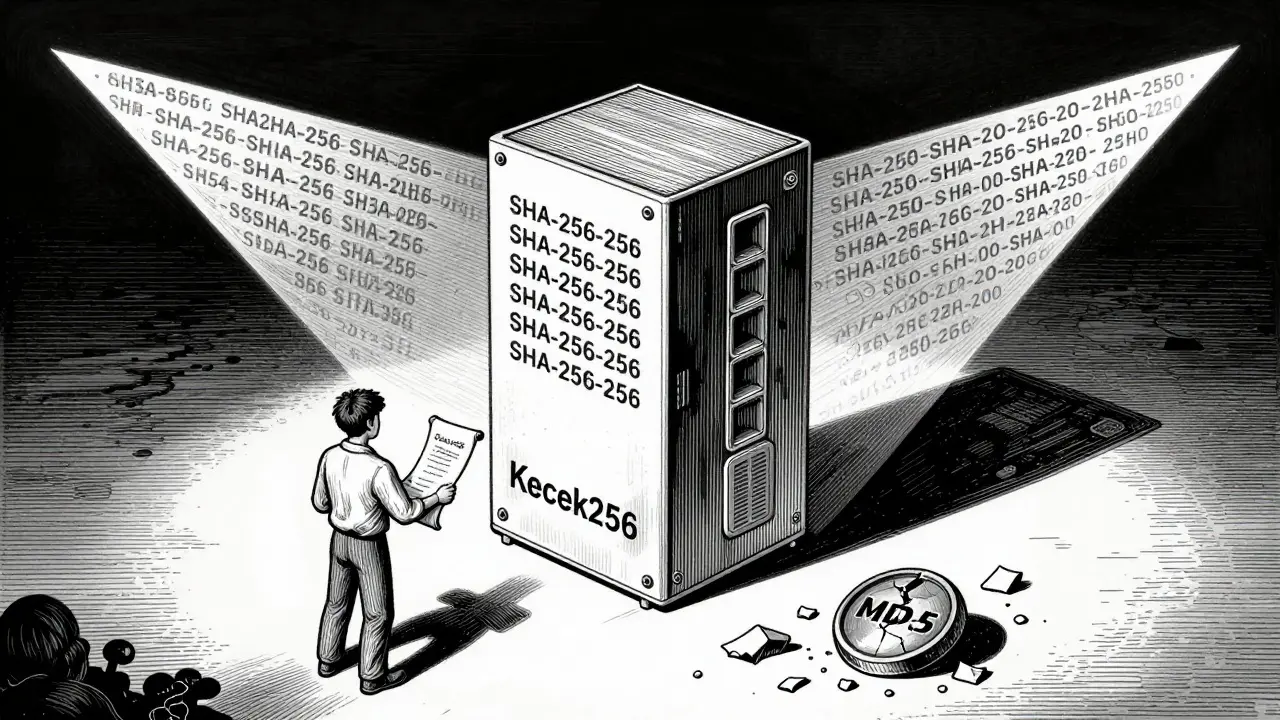
Even if Bitcoin is safe, other parts of the ecosystem aren’t. Smart contracts on Ethereum use Keccak256 (a variant of SHA-3). But developers sometimes useabi.encodePacked() to combine data - like addresses, amounts, and timestamps - without separators. That can lead to collisions. Two different sets of inputs can produce the same hash, tricking the contract into executing the wrong action.
In 2022, a DeFi protocol lost $23 million because of a poorly encoded hash in a withdrawal function. The attacker found two different withdrawal requests that hashed to the same value. The contract couldn’t tell them apart.
Even password storage can be affected. If a blockchain wallet uses a weak hash to store private key derivatives, a collision could let someone log in using a different password than the original.
What Happens When Quantum Computing Arrives?
Current hash functions are safe because they’re hard to crack with classical computers. But quantum computers change the game. Grover’s algorithm can theoretically cut the time to find a collision in half. Instead of 2^128 operations, you’d need 2^64. That’s still a huge number - but not impossible for a future quantum machine. NIST is already working on post-quantum hash functions. Blockchains that can’t upgrade their hash algorithms will be vulnerable. Bitcoin’s rigidity is a strength - and a risk. If a quantum collision attack emerges, Bitcoin can’t just swap SHA-256 for something better without a hard fork. And hard forks split the network. Ethereum, by contrast, has built-in upgrade paths. It’s already preparing for quantum resistance through its roadmap. That flexibility might be its biggest advantage.How to Protect Against Hash Collisions
If you’re a developer:- Avoid
abi.encodePacked()in Solidity unless you absolutely need it. Useabi.encode()instead - it adds proper separators. - Always audit hash usage in smart contracts. Look for dynamic data concatenation.
- Use SHA-3 (Keccak256) or SHA-256. Never use MD5 or SHA-1.
- Stick to well-established blockchains like Bitcoin and Ethereum. They’ve invested millions in security audits.
- Avoid obscure altcoins that use custom or untested hash functions.
- Keep your wallet software updated. Many wallets auto-update cryptographic libraries to patch vulnerabilities.