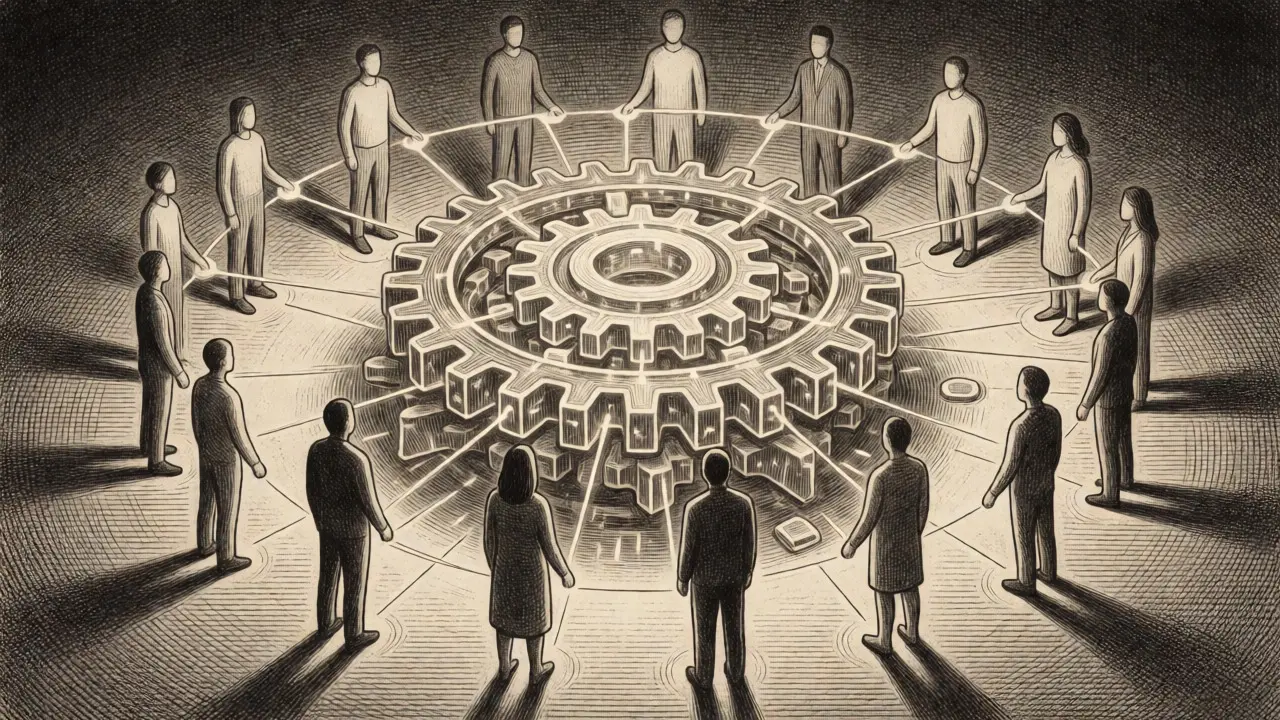
You’ve probably heard the buzzwords: DAO, decentralization, community-led projects. But if you’re wondering how a group of strangers scattered across the globe actually makes decisions without a CEO or a boardroom, you’re asking the right question. It’s not magic; it’s code and incentives. At its core, Decentralized Autonomous Organization (DAO) is an entity where rules are encoded in smart contracts on a blockchain, allowing members to vote on proposals using tokens rather than traditional shares. Think of it as a digital co-op where the bylaws are written in Python or Solidity, and enforcement happens automatically.
| Component | Function | Real-World Analogy |
|---|---|---|
| Proposals | Suggested changes submitted by members | A motion at a town hall meeting |
| Voting Mechanisms | Method for casting votes (e.g., token-weighted) | Ballot boxes with weighted votes |
| Governance Tokens | Grants voting power and ownership rights | Shares in a company |
| Smart Contracts | Automatically executes approved decisions | An automated bank teller that releases funds when conditions are met |
The Four Pillars of DAO Operations
To understand how this machine works, you need to look at its four moving parts. First, there are Proposals. These aren’t just vague ideas; they are specific actions-like "release $50,000 from the treasury for marketing" or "change the fee structure." Anyone with enough tokens can usually submit one. Second, we have Voting Mechanisms. This is where the democracy happens. Most DAOs use token-weighted voting, meaning if you hold 1% of the total supply, your vote counts for 1%. Third, Governance Tokens are the fuel. They represent your stake in the project. Finally, Smart Contracts act as the executor. Once a proposal passes, the smart contract doesn’t wait for a manager to sign off. It moves the money or changes the protocol parameter immediately. This eliminates human error and corruption but requires perfect code.
From Idea to Execution: The Proposal Lifecycle
So, what does the day-to-day look like? It starts with submission. A member drafts a proposal, often detailing the budget, timeline, and expected outcome. This isn’t hidden in a private Slack channel; it’s posted on platforms like Discourse or Snapshot for public debate. This transparency is crucial because trust in a DAO comes from visibility, not authority. During the discussion phase, community members critique the idea. Maybe the budget is too high, or the timeline is unrealistic. Modifications are common here. Once the debate settles, voting begins. On platforms like Snapshot, this is often gas-free, meaning you don’t pay Ethereum transaction fees just to cast a ballot. If the majority approves, the final step is execution. For simple decisions, this might be manual coordination. But for critical protocol changes, a smart contract triggers the action. Imagine a proposal to increase staking rewards. If passed, the smart contract updates the reward distribution algorithm on-chain. No middleman needed. This automation is the backbone of Web3 organizations, ensuring that what the community decides is exactly what happens.
Voting Models: Not All Democracy Is Created Equal
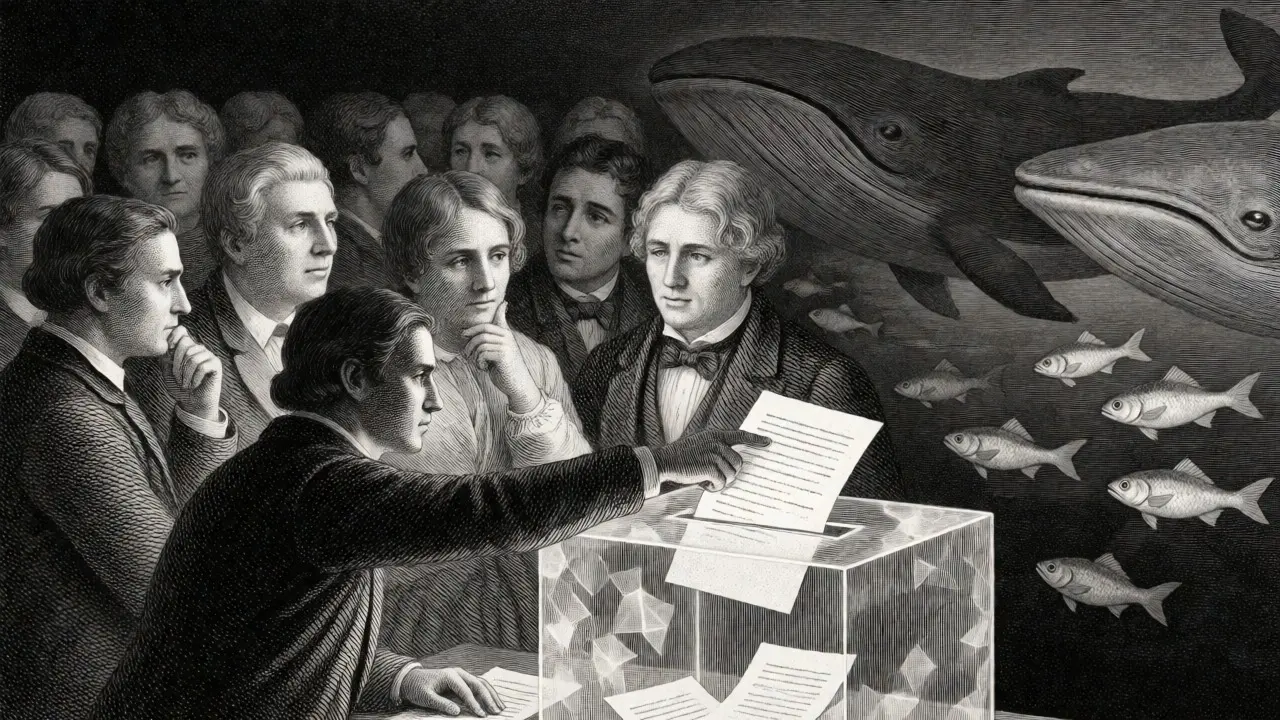
Here’s where it gets tricky. Just saying "we vote" isn’t enough. Different models solve different problems. The most common is Token-Weighted Voting, where power correlates with wealth. Simple, but vulnerable to whales-large holders who can sway outcomes single-handedly. To combat this, some DAOs use Quadratic Voting. In this system, the cost of additional votes increases exponentially. Buying five votes costs more than buying one, which helps protect minority interests against wealthy participants. Another interesting model is Rage Quitting, popularized by Moloch DAOs. If you disagree with a passed proposal, you can "rage quit," withdrawing your tokens and share of the treasury before the proposal takes effect. This protects minority shareholders from being forced into bad deals. However, it makes long-term planning difficult since members can exit instantly. There’s also Delegated Proof of Stake (DPoS) style voting, where you delegate your voting power to a trusted representative. This reduces voter fatigue but reintroduces a layer of hierarchy. Choosing the right model depends on whether you value speed, fairness, or security more.
Common Pitfalls: Whales and Voter Apathy
Let’s be real: DAO governance has bugs. The biggest one is low participation. Studies show that in many large DAOs, less than 10% of eligible voters participate. This means a small group effectively runs the show. Why? Because researching proposals takes time, and the average token holder might not feel their single vote matters. This leads to the second problem: whale dominance. When participation is low, those who do vote are often the largest holders. They can push through agendas that benefit them but hurt the broader ecosystem. To fix this, successful DAOs implement incentives. Some offer rewards for voting, similar to paying people to show up at a shareholder meeting. Others use reputation systems, where active participation grants extra influence. Security is another hurdle. If a smart contract governing the treasury has a bug, a hacker could drain the funds. That’s why rigorous audits and gradual rollout of new features are non-negotiable. You wouldn’t hand over your life savings to a stranger without checking their ID; don’t let a DAO execute unaudited code.
Real-World Examples of DAO Governance
It helps to see this in action. Take ENS DAO, which governs the Ethereum Name Service. They manage millions of dollars in treasury funds and decide on protocol upgrades. Their governance is structured around working groups that handle specific tasks, reducing the burden on every individual voter. Then there’s Friends With Benefits (FWB), a social DAO. Here, governance is about community culture-approving new members or funding events. Their model relies heavily on social signaling and NFT membership rather than pure financial stakes. Contrast this with JuiceboxDAO, which focuses on crowdfunding. Their governance revolves around how funds are raised and allocated. Each DAO tailors its rules to its purpose. A financial protocol needs strict risk management; a social club needs flexible cultural norms. Understanding these nuances helps you pick which DAO to join or invest in. Don’t just look at the token price; look at how they make decisions.
Why This Matters for the Future of Work
DAO governance isn’t just a crypto niche experiment. It’s a blueprint for the future of work. Traditional corporations struggle with bureaucracy and misaligned incentives. Executives get bonuses even if the company fails. In a DAO, if the community votes poorly, everyone loses value. This alignment forces better decision-making. As remote work becomes standard, DAOs offer a way to coordinate global teams without centralized control. You don’t need a boss telling you what to do; you need clear rules and shared goals. However, scalability remains a challenge. Can a DAO with 100,000 members function as efficiently as one with 100? Tools are improving, but human nature hasn’t changed. We still crave leadership and clarity. The best DAOs blend code with community management, recognizing that technology enables but doesn’t replace human judgment. If you’re building a project today, consider how you’ll govern it. Will you centralize early and decentralize later, or start fully distributed? The answer defines your culture and your resilience.
What is a governance token?
A governance token is a cryptocurrency that gives its holder the right to vote on proposals within a DAO. Unlike utility tokens used for transactions, governance tokens represent ownership and decision-making power. Holding these tokens allows you to influence the direction of the project, such as changing protocol parameters or allocating treasury funds.
Do I need to hold tokens to participate in a DAO?
Not always. While most DAOs require token holdings to vote, many allow anyone to discuss proposals in forums or Discord channels. Some DAOs also use non-transferable reputation tokens or soulbound tokens that reflect contribution history rather than financial investment, allowing active contributors to gain voting power without buying tokens.
What happens if a smart contract has a bug?
If a bug is found, the DAO typically votes to pause the affected functions or upgrade the contract. In severe cases, the community might fork the chain or roll back transactions. Rigorous auditing before deployment is essential to minimize this risk, but no code is perfect, so emergency governance powers are often built into the system.
Can whales control all DAO decisions?
Whales can exert significant influence, especially in low-participation environments. However, mechanisms like quadratic voting, delegation, and rage quitting help mitigate their power. Additionally, many DAOs set quorum thresholds, requiring a minimum percentage of total supply to vote before a decision is valid, preventing a small group of whales from unilaterally controlling outcomes.
Is DAO governance legally binding?
This varies by jurisdiction. In some places, DAOs are recognized as legal entities (like LLCs in Wyoming), making their decisions legally enforceable. Elsewhere, they operate in a gray area. Smart contracts execute automatically regardless of law, but external agreements may be needed to enforce off-chain obligations or resolve disputes in court.
It is fascinating how we are attempting to encode the messy, chaotic essence of human consensus into rigid lines of code. We treat governance as a mechanical problem when it is fundamentally a philosophical one about trust and power dynamics. The smart contract executes what is written, but it cannot interpret intent or context. When a DAO votes to drain a treasury based on a technicality, they haven't solved democracy; they have merely automated tyranny by the majority. True decentralization requires more than just tokens; it requires a shared moral compass that no algorithm can truly replicate.
Oh please spare me the utopian drivel. You think some Solidity script is gonna replace centuries of political philosophy? It’s all just vaporware for people who hate reading actual books. 🙄
Because clearly, the only thing missing from modern corporate bureaucracy was a mechanism to let college dropouts vote on protocol upgrades with money they borrowed from their parents. How revolutionary.
I absolutely love this breakdown because it really highlights how important it is for us to stay engaged and not just sit on the sidelines! It is so easy to feel like our little voice doesn't matter in a sea of whales, but if we don't show up to debate and vote, then we are literally letting others decide our future without our input. I always tell my community that participation is the ultimate form of empowerment, so even if you only have a few tokens, your perspective adds value to the discussion and helps shape the culture of the project in ways that raw financial weight never could!
Wake up sheeple 🐑👀 The "low participation" stat isn't an accident, it's by design! 😱 While you're sleeping, the insiders are farming your liquidity and changing the rules behind closed Discord doors. 🚪💸 They want you apathetic so they can rug pull without a fight. Don't fall for the narrative that voting solves everything when the quorum thresholds are rigged from day one. 📉🔥 Check the wallets, check the multisigs, and stop trusting the code blindly. 👁️🗨️