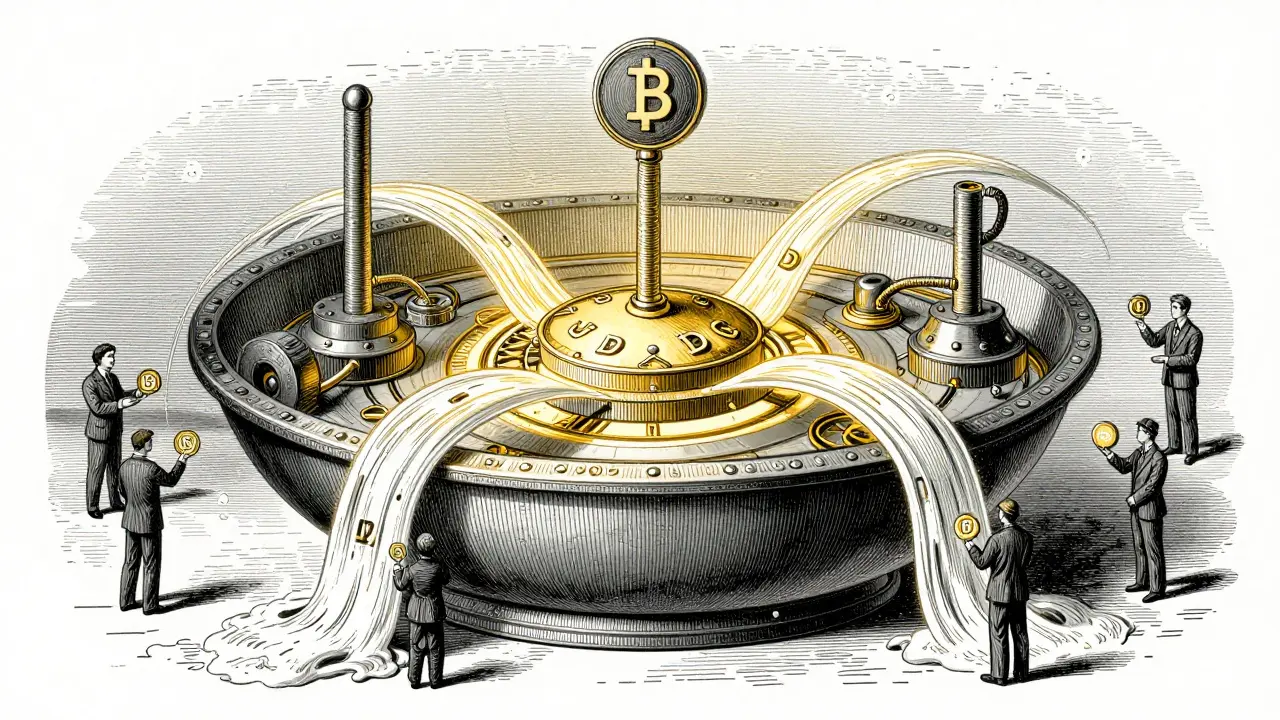
Providing liquidity in DeFi isn’t just a way to make money-it’s how decentralized exchanges actually work. Without people depositing crypto into liquidity pools, there’d be no trades, no swaps, no DeFi at all. It’s the backbone of platforms like Uniswap, SushiSwap, and Raydium. And yes, you can earn real fees just by holding crypto in a smart contract. But it’s not as simple as staking. There are risks, rules, and strategies you need to know before you put your money in.
What Is a Liquidity Pool?
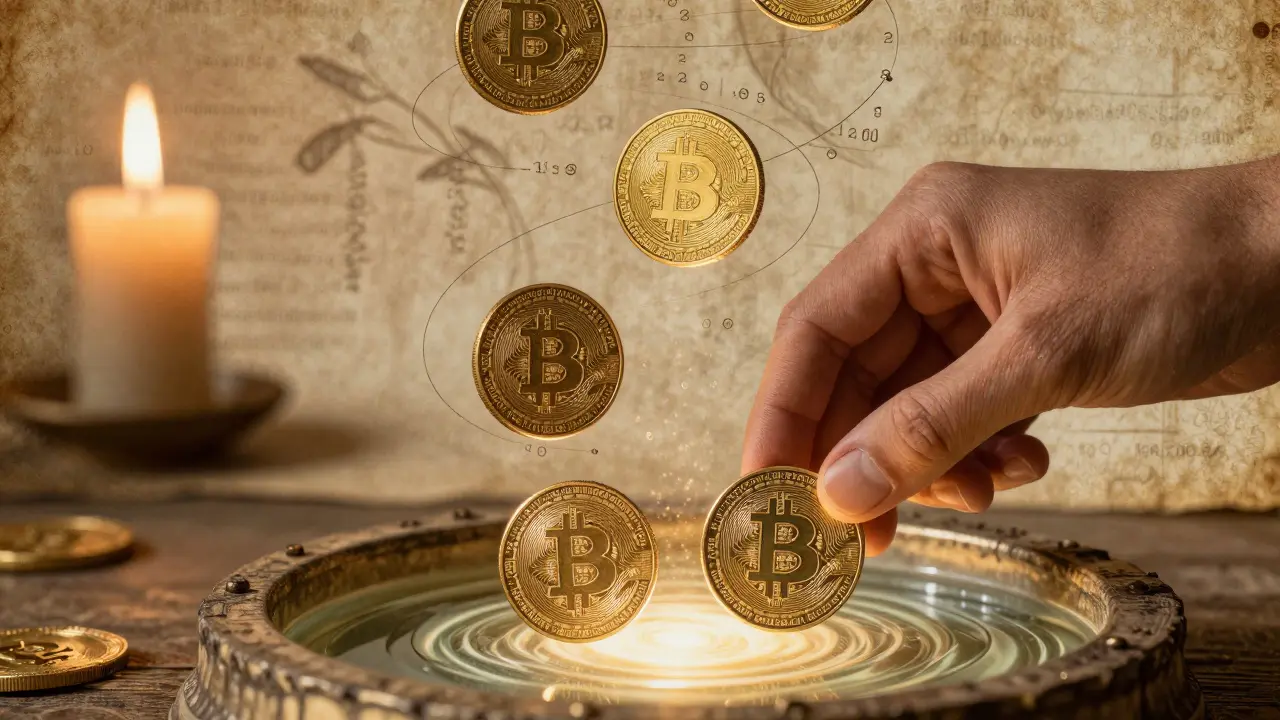
A liquidity pool is a smart contract that holds two types of cryptocurrency, like ETH and USDC, or SOL and USDT. These pairs let traders swap one token for another without needing someone else to take the other side of the trade. Instead of matching buyers and sellers, the pool uses an algorithm-called an Automated Market Maker (AMM)-to set prices based on how much of each token is in the pool.When you add liquidity, you deposit equal dollar values of both tokens. For example, if you want to add to the ETH/USDC pool, you might put in $500 worth of ETH and $500 worth of USDC. In return, you get LP tokens-proof that you own a slice of that pool. Those LP tokens are your ticket to earning fees.
How Do You Earn Fees?
Every time someone trades on the platform, they pay a small fee-usually 0.3% on Uniswap. That fee doesn’t go to the exchange. It goes straight into the liquidity pool. And since you own a share of the pool, you earn a share of those fees.Let’s say you own 1% of the ETH/USDC pool. If traders pay $10,000 in fees over a week, you get $100. Simple math. But here’s the catch: fees only add up if the pool is active. A pool with low trading volume might earn you pennies a month. A popular pair like ETH/USDC, on the other hand, can generate hundreds of dollars in fees per week for large providers.
Some platforms go further. Curve Finance charges only 0.04% on stablecoin trades but pays out extra CRV tokens. Balancer lets you create pools with up to eight tokens and custom weights. Raydium on Solana offers SOL rewards on top of trading fees. These extra rewards can boost your annual yield to 40%, 60%, even 100% in some cases. But remember: token rewards are volatile. If the reward token crashes, your earnings drop-even if the fees stay the same.
Impermanent Loss: The Hidden Cost
This is where most beginners lose money. Impermanent loss isn’t a fee. It’s not a hack. It’s math.Imagine you deposit $1,000 in ETH and $1,000 in USDC. ETH is $2,000 per coin, so you put in 0.5 ETH. A week later, ETH doubles to $4,000. If you’d just held your ETH, you’d now have $2,000 in value. But because the pool rebalances automatically, the AMM sells some of your ETH to buy USDC and keep the 50/50 ratio. Now you’ve got less ETH and more USDC than when you started.
When you withdraw, you might end up with $1,800 worth of ETH and $1,200 worth of USDC-$3,000 total. That’s a $200 loss compared to just holding. That’s impermanent loss. It’s called "impermanent" because if ETH drops back to $2,000, your loss disappears. But if you withdraw while the price is off, it becomes permanent.
Studies show that when one token doubles, you lose about 5.7% of your value compared to holding. If it triples? You lose nearly 20%. The bigger the price swing, the bigger the loss.
The fix? Stick to pairs that move together. ETH/wstETH, USDC/DAI, or WBTC/renBTC. These pairs have low volatility, so impermanent loss is minimal. Avoid wild coins like MEME tokens or new altcoins with no trading history. They’re risky not just because of price swings-but because the pool might get drained by bots or rug pulls.
Choosing the Right Platform
Not all DeFi platforms are created equal. Here’s how they stack up:| Platform | Primary Chains | Typical Fee | Extra Rewards | Best For |
|---|---|---|---|---|
| Uniswap | Ethereum, Arbitrum, Polygon | 0.3% | UNI tokens | Popular pairs, high volume |
| Curve Finance | Ethereum, Polygon | 0.04% | CRV tokens | Stablecoins, low volatility |
| SushiSwap | Ethereum, BSC, Avalanche | 0.25% | SUSHI tokens | Multi-chain users |
| Raydium | Solana | 0.2% | RAY tokens | Low fees, fast trades |
| Balancer | Ethereum, Arbitrum | Custom (0.01%-10%) | BAL tokens | Advanced users, multi-token pools |
Uniswap is the safest bet for beginners. It’s the oldest, most audited, and has the most liquidity. If you’re new, start there with ETH/USDC or WBTC/USDC. If you want lower fees and faster transactions, try Raydium on Solana. Transaction costs there are under $1. On Ethereum, gas fees can hit $50 during spikes-making small deposits pointless.
Getting Started: Step-by-Step
You don’t need to be a coder. Here’s how to do it:- Get a wallet: MetaMask for Ethereum, Phantom for Solana.
- Buy the two tokens you want to pair. Make sure they’re equal in dollar value.
- Go to the platform’s website (e.g., app.uniswap.org).
- Connect your wallet.
- Select the trading pair (e.g., ETH/USDC).
- Enter the amount. The site will auto-fill the matching token.
- Click "Supply" and approve the transaction in your wallet.
- Confirm the deposit. You’ll get LP tokens instantly.
- Check your dashboard. You’ll see your share of the pool and accumulated fees.
Most platforms require a minimum of $100-$500 to make sense. Smaller amounts get eaten up by gas fees. On Layer 2 networks like Arbitrum or Polygon, you can start with $50 and still break even.
Advanced Strategies
Once you’re comfortable, you can level up:- Yield farming LP tokens: Stake your LP tokens in another protocol to earn even more rewards. For example, deposit your UNI-V2 LP tokens into a yield aggregator like Yearn Finance to earn extra UNI and ETH.
- Concentrated liquidity (Uniswap V3): Instead of spreading your money across all price ranges, you pick a narrow band-say, $1,800 to $2,200 for ETH. Your capital works harder inside that range, earning more fees. But if ETH moves outside your range, you earn nothing until it comes back. This requires active monitoring.
- Automated rebalancing: Tools like Rebalance or DeFi Saver can automatically adjust your positions when prices shift, helping reduce impermanent loss.
These strategies can boost returns-but they also add complexity. One wrong move and you lose more than you gain. Start simple. Master the basics before playing with fire.
Real-World Risks
Liquidity provision isn’t risk-free. Here’s what can go wrong:- Smart contract bugs: Even big platforms like Uniswap have had exploits. Always check if the contract has been audited by firms like CertiK or Trail of Bits.
- Token depegging: If a stablecoin like USDC drops to $0.95, your pool loses value instantly.
- Withdrawal delays: Some platforms freeze withdrawals during market crashes. This happened on several protocols in 2022.
- Regulation: The U.S. SEC is watching DeFi. Future rules could force platforms to collect KYC data, making anonymous liquidity provision harder.
Don’t put in more than you can afford to lose. Treat it like a side income-not your retirement fund.
Is It Worth It?
In 2024, the total value locked in DeFi liquidity pools hit $50 billion. Uniswap alone holds over $4 billion. That’s real money. People are making money here.But not everyone. Those who win stick to stable pairs, avoid hype tokens, and understand impermanent loss. They use tools like DeFiLlama to track pool performance and APY.vision to compare yields. They wait for low gas fees. They don’t chase 200% APYs from unknown tokens.
If you’re patient, careful, and willing to learn, providing liquidity can be one of the most reliable ways to earn passive income in crypto. It’s not magic. It’s math. And if you do it right, it pays.
Can you lose money providing liquidity?
Yes. The biggest risk is impermanent loss, which happens when the price of one token in your pair moves sharply compared to the other. If you withdraw while the price is unbalanced, you’ll end up with less value than if you’d just held the tokens. Fees can offset this over time, but if the price doesn’t return, the loss becomes permanent.
What’s the safest liquidity pool to start with?
The safest pair is ETH/USDC on Uniswap. It has high volume, low volatility, and strong security audits. Stablecoin pairs like USDC/DAI are even safer but earn lower fees. Avoid new or obscure tokens-those pools are often targeted by bots and scams.
Do I need to pay gas fees every time I earn fees?
No. You earn fees automatically as trades happen. You only pay gas when you deposit, withdraw, or claim rewards. On Ethereum, gas can be expensive, so it’s best to wait until you have enough accumulated fees to make a withdrawal worthwhile. On Layer 2 networks like Arbitrum or Polygon, fees are under $1, so you can claim more often.
How often should I check my liquidity position?
Check every 1-2 weeks if you’re using a simple pool like ETH/USDC. If you’re using concentrated liquidity (Uniswap V3), check daily. Price changes can move your liquidity out of your chosen range, and you’ll stop earning fees until it returns. Use dashboards like DeFiLlama or Zapper to monitor performance without logging in constantly.
Can I withdraw my liquidity anytime?
Yes, you can withdraw anytime. But if the price of your tokens has changed significantly since you deposited, you may experience impermanent loss. Also, withdrawing during high network congestion can cost more in gas than you’ve earned. Wait for low-fee periods if possible.
Are liquidity pools insured?
No. Unlike bank deposits, liquidity pools are not insured by any government or institution. If a smart contract is hacked or the token collapses, you lose your funds. That’s why audits and reputation matter. Stick to well-known platforms and avoid untested pools.


also avoid meme coins like the plague. i lost 2k on a solana pool last year. never again.
concentrated liquidity is cool but only if you're watching it daily. otherwise you'll miss your range and earn nothing.
defi is not a race. its a garden. water it. don't dig it up.