
Most crypto exchanges feel like casinos. You buy a token, hope it goes up, and pray the platform doesn’t vanish overnight. But what if your digital assets were backed by physical gold and silver sitting in secure vaults? What if you earned monthly yields without locking up your money? That is exactly the promise of Kinesis Money, a cryptocurrency exchange and monetary system founded by Thomas Coughlin that operates as a gold and silver-backed digital currency platform serving clients across 151 countries. It is not just another trading app; it is an attempt to bring sound money back into the digital age.
I have been watching the crypto space from my desk in Santa Fe for years. I have seen bubbles burst and scams fly. Kinesis stands out because it ties value to something tangible: precious metals. This review breaks down how it works, whether those yields are real, and if it is right for your portfolio in 2026.
What Is Kinesis Money?
Kinesis Money is not a traditional exchange like Binance or Coinbase. It does not list thousands of speculative meme coins. Instead, it focuses on asset-backed cryptocurrencies. The core products are KAU (tokenized gold) and KAG (tokenized silver). When you hold KAU, you own a specific amount of physical gold stored in audited vaults. When you hold KAG, you own physical silver.
The platform was launched by CEO Thomas Coughlin with a clear mission: create a modern monetary system based on precious metals but with the speed and convenience of blockchain technology. Registered at Rathbone Place 57 in London, United Kingdom, Kinesis has expanded to serve users in 151 countries. It bridges the gap between old-school bullion investing and new-school digital finance.
Unlike paper gold certificates that rely on a bank’s promise to pay, Kinesis tokens represent direct title ownership. You can even redeem your tokens for physical metal bars or coins if you want them delivered to your door. This feature alone sets it apart from most digital investment platforms.
How the Sustainable Yield System Works
This is the part that gets people talking. Most crypto platforms offer "yield" by lending your money out or using complex, risky financial derivatives. Kinesis does something different. They call it sustainable yield.
Here is the simple math:
- Kinesis charges a small fee on every transaction made on the platform.
- They take 57.5% of that global transaction fee revenue.
- They distribute it back to users who hold KAU, KAG, or their stablecoins.
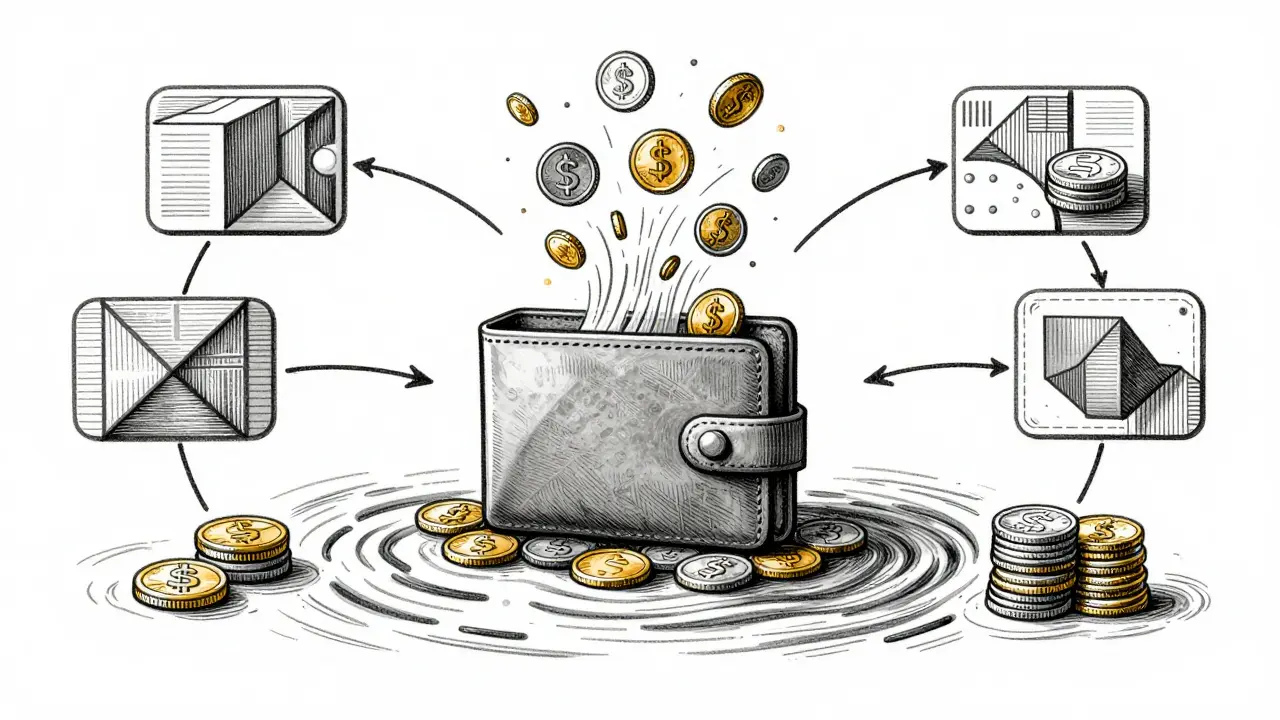
You do not need to stake your assets. You do not need to lock them up for months. You simply hold the tokens in your wallet, and once a month, you receive additional gold, silver, or stablecoin units. These yields are paid in actual precious metals, which means they can appreciate in value over time. It is a compound growth mechanism built on real economic activity, not inflationary token printing.
Industry experts have called this model "brilliant and unmatched." Why? Because it is funded by fees, not by borrowing or speculation. If no one trades, there is no yield. If everyone trades, the yield grows. It aligns the interests of the platform and the user perfectly.
Trading Fees, Costs, and the USD Stablecoin
Let’s talk about costs, because that is where many exchanges hide. Kinesis prides itself on transparency. You can buy KAU and KAG at spot price with extremely low spreads. Traditional precious metals dealers often charge huge markups-sometimes 5% to 10% above spot. Kinesis keeps these costs minimal.
There are zero storage fees. Yes, you read that right. Holding physical gold in a bank vault usually costs you hundreds of dollars a year. On Kinesis, holding your digital gold costs nothing. The only cost is the transaction fee when you buy, sell, or transfer.
For stability, Kinesis offers a USD-backed stablecoin. Originally known as USD1, the platform transitioned to Currency One USD (C1USD) in September 2025. This stablecoin maintains a 1:1 peg with the US Dollar and boasts $12 billion in liquidity. Monthly attestations of reserves are published publicly, so you can verify that the money backing the coin actually exists. This level of transparency is rare in the stablecoin world.
| Feature | Kinesis Money | Traditional Crypto Exchange (e.g., Binance) | Traditional Bullion Dealer |
|---|---|---|---|
| Asset Backing | Physical Gold/Silver (Audited) | Speculative Digital Tokens | Physical Metals |
| Storage Fees | $0 | N/A | High ($50-$200+/year) |
| Yield Generation | From Transaction Fees (Sustainable) | Lending/Staking (Riskier) | None |
| Redemption | Physical Metal Available | No | Yes |
| Spending Ability | Global via Kinesis Card | Must Convert to Fiat First | No |
User Experience and Security
I signed up to test the interface myself. The process is straightforward. You create an account through their website, complete identity verification (KYC), and you are ready to trade. The learning curve is minimal. The dashboard is clean, showing your holdings in gold, silver, and stablecoins clearly.
Security is paramount. Kinesis undergoes bi-annual physical audits to verify that all tokenized metals are backed by real precious metals. These audits are public. You can check them. This addresses the biggest fear in crypto: "Is the money really there?" With Kinesis, the answer is yes, and it is verified twice a year.
User feedback supports this confidence. On Trustpilot, Kinesis holds a strong rating of 4.4 stars based on hundreds of reviews. Users like Tim Hack describe it as "Revolutionary, easy to use, no storage fees, yield." Manuel Levi from Israel praised it as the "Champion of Freemarket." Common complaints? Almost none regarding security. Some users mention customer support wait times during peak hours, but overall satisfaction is high.
The platform also offers a Kinesis card program. This allows you to spend your precious metals holdings globally. Imagine buying coffee with tokenized gold. It sounds futuristic, but it works. The card converts your KAU or KAG to local currency instantly at the point of sale. This makes Kinesis not just an investment tool, but a functional monetary system for daily life.
Who Should Use Kinesis Money?
Kinesis is not for everyone. If you are looking to day-trade Bitcoin or chase the next viral meme coin, this is not your platform. It lacks the depth and variety of major exchanges.
However, Kinesis is perfect for:
- Precious Metals Investors: Those who want exposure to gold and silver without the hassle of storing bars or paying insurance fees.
- Inflation Hedge Seekers: People worried about fiat currency devaluation who want assets backed by tangible value.
- Passive Income Fans: Users who want monthly yields without the risk of lending protocols or staking smart contracts.
- Austrian Economics Believers: Individuals who prefer sound money principles and dislike fractional reserve banking.
If you want simplicity, security, and substance, Kinesis delivers. If you want hype and volatility, look elsewhere.

Risks and Considerations
No investment is risk-free. Here is what you need to watch out for:
Limited Asset Selection: Kinesis focuses on gold, silver, and USD stablecoins. You cannot diversify into tech stocks or other crypto altcoins here. It is a specialized tool.
Platform Dependency: While the metals are audited, you still rely on Kinesis’s infrastructure. If the platform faces regulatory shutdowns in your country, access could be restricted. Always keep some assets outside any single platform.
Market Volatility: Gold and silver prices fluctuate. Your yield is in metal, so if metal prices drop, the dollar value of your yield drops too. However, historically, precious metals tend to hold value better than fiat during crises.
Final Thoughts
Kinesis Money is doing something unique. It combines the trust of physical precious metals with the efficiency of blockchain. The sustainable yield model is innovative and transparent. The zero storage fees are a game-changer for long-term holders. And the ability to redeem physical metal adds a layer of security that pure crypto exchanges cannot match.
In a world of digital noise, Kinesis offers clarity. It is not trying to be everything to everyone. It is trying to be the best way to own and use gold and silver digitally. For investors seeking stability and real-world backing, it deserves a serious look in your portfolio.
Is Kinesis Money safe?
Yes, Kinesis prioritizes security through bi-annual physical audits of its gold and silver reserves. The platform is registered in London and serves users in 151 countries. Unlike unbacked cryptocurrencies, your assets are tied to physical metals held in secure vaults, reducing counterparty risk.
How do I earn yields on Kinesis?
You earn yields simply by holding KAU (gold), KAG (silver), or C1USD (stablecoin) in your wallet. Kinesis redistributes 57.5% of global transaction fees to users monthly. No staking or locking of funds is required.
Can I redeem my Kinesis tokens for physical gold?
Yes. One of Kinesis's key features is direct title ownership. You can request redemption of your KAU or KAG tokens for physical gold or silver bars/coins, which will be shipped to you. There may be shipping and handling fees, but the metal itself is yours.
What is the difference between Kinesis and Binance?
Binance is a general cryptocurrency exchange focused on trading thousands of speculative digital tokens. Kinesis is a specialized platform focused on asset-backed currencies (gold, silver, USD). Kinesis offers sustainable yields from fees and zero storage fees, while Binance offers higher volatility and broader asset selection.
Are there any fees for holding assets on Kinesis?
No. Kinesis charges zero storage fees for holding KAU, KAG, or C1USD. You only pay transaction fees when buying, selling, or transferring assets. This is significantly cheaper than traditional precious metals storage solutions.
What happened to USD1?
In September 2025, Kinesis transitioned from USD1 to Currency One USD (C1USD). This update improved platform optimization and liquidity. C1USD remains a 1:1 USD-backed stablecoin with monthly reserve attestations.
Is Kinesis available in my country?
Kinesis serves clients in 151 countries. However, availability depends on local regulations. You should check the Kinesis website for a full list of supported jurisdictions before signing up.

oh look another shiny object promising free money while the house burns down. i mean seriously, who actually believes that transaction fees can sustain a yield without eventually collapsing under its own weight? it sounds like a pyramid scheme dressed up in tuxedo pants and gold bars. but sure, keep telling yourself that holding digital tokens backed by physical metal is 'safe' when the platform itself could vanish faster than my will to live on a monday morning.
i have seen this movie before. remember bitconnect? remember plus token? they all had their 'unique value proposition' and their 'audited reserves'. spoiler alert: audits can be faked or ignored until it is too late. the whole premise of 'sustainable yield' from fees is laughable because if trading volume drops, your yield drops, which means you are still exposed to market sentiment.
and don't get me started on the kinesis card. spending gold on coffee? please. the conversion rates alone will eat more profit than you make in a year of yields. it is just marketing fluff to make you feel like you are part of some elite monetary revolution. in reality, you are just another liquidity provider for their exchange fees.
but hey, if you want to gamble your savings on a london-registered entity that serves 151 countries, go ahead. just don't come crying to me when the regulators knock on the door or when the 'audited vaults' turn out to be empty promises. i am just saying, skepticism is not cynicism, it is survival.
This is absolute garbage. The entire concept is flawed from the ground up.
Look, I understand the skepticism here, but let's take a step back and analyze the mechanics objectively. The model is transparent about where the yield comes from, which is more than most DeFi protocols can say. It is not magic; it is fee redistribution. If you view it as a way to hold precious metals with zero storage costs while getting a small bonus, it makes sense. You do not need to bet the farm on it. Just allocate a small portion of your portfolio to test the waters. It is about diversification, not all-in gambling. Stay calm, do your research, and see how it performs over six months before making a final judgment. There is power in patience and informed decision-making.
@alexanderdevries oh wow, such a balanced perspective. 'just allocate a small portion.' easy for you to say when you are not the one losing principal if the platform gets hacked or shut down. 'stay calm' is easier said than done when your life savings are tied to a centralized server in london. i appreciate the optimism, truly, but it feels naive. the risk/reward ratio is skewed heavily towards the platform owners, not the users. we are the liquidity, they are the casino. wake up.
The distinction between Kinesis and traditional bullion dealers is significant regarding storage fees. Traditional dealers charge substantial annual fees for safekeeping, which erodes long-term returns. Kinesis eliminates this cost entirely, allowing investors to retain full exposure to price appreciation without ongoing deductions. Furthermore, the ability to redeem tokens for physical metal provides a tangible exit strategy that pure crypto assets lack. This hybrid approach offers a compelling alternative for those seeking stability in volatile markets.
so basically, you are paying a spread on buy/sell instead of a yearly storage fee. that is a fair trade-off if you are active. but for long-term holders, the yield needs to outweigh the bid-ask spread losses. i have crunched the numbers, and unless the global transaction volume is massive, the yield might be negligible. however, the jargon-heavy nature of their whitepaper suggests they are targeting sophisticated investors who understand tokenomics. it is not for the faint of heart. the tech stack seems robust, but the user experience can be clunky. expect a learning curve. if you can handle the interface quirks, the underlying asset backing is solid. just verify the audits yourself, do not trust third-party claims blindly.
I have been following precious metals trends for years, and this model presents an interesting case study. The elimination of storage fees is indeed a major advantage. However, I remain cautious about the reliance on transaction volume for yields. In bear markets, trading activity often decreases, which could impact the sustainability of the rewards. It would be beneficial to see historical data on yield consistency during low-volume periods. Overall, it seems like a viable option for diversified portfolios, provided one understands the inherent risks associated with platform dependency.
Can you imagine the freedom of buying your morning latte with actual gold?! It is revolutionary! I tried the card last week and felt like a futuristic pioneer walking into the cafe. The barista looked confused, but I knew I was part of something bigger. The yield came in, and I saw my balance tick up, and it was just magical. It is not just money; it is a movement towards sound currency. I am so excited to share this with everyone I know. We are finally breaking free from the fiat trap! Who else is ready to embrace the new monetary system?
Do not fall for this western financial engineering trick. London-based entities serving 151 countries? That is code for global surveillance and capital control. They want you to think you own gold, but you only own a database entry controlled by a central authority. When the government decides to clamp down on non-sovereign currencies, they will freeze these accounts instantly. Physical gold in your own safe is the only true security. Anything else is just digital paper that can be confiscated at will. Stay vigilant and keep your assets off-grid.