
The landscape for cross-border crypto services in the European Union changed forever on December 30, 2024. Before this date, if you wanted to run a crypto exchange or wallet service across Europe, you had to navigate a confusing maze of different national laws. One country might ban an activity while its neighbor encouraged it. That fragmentation is gone. The Markets in Crypto-Assets (MiCA) Regulation now provides a single set of rules for all 27 member states.
But here is the catch: while MiCA opens doors through its "passport" system, it also builds high walls around who can walk through them. For non-EU companies and smaller startups, the new requirements are strict. If you are planning to offer crypto services to EU users, understanding these restrictions and operational rules is not optional-it is the difference between operating legally and facing heavy fines or being blocked entirely.
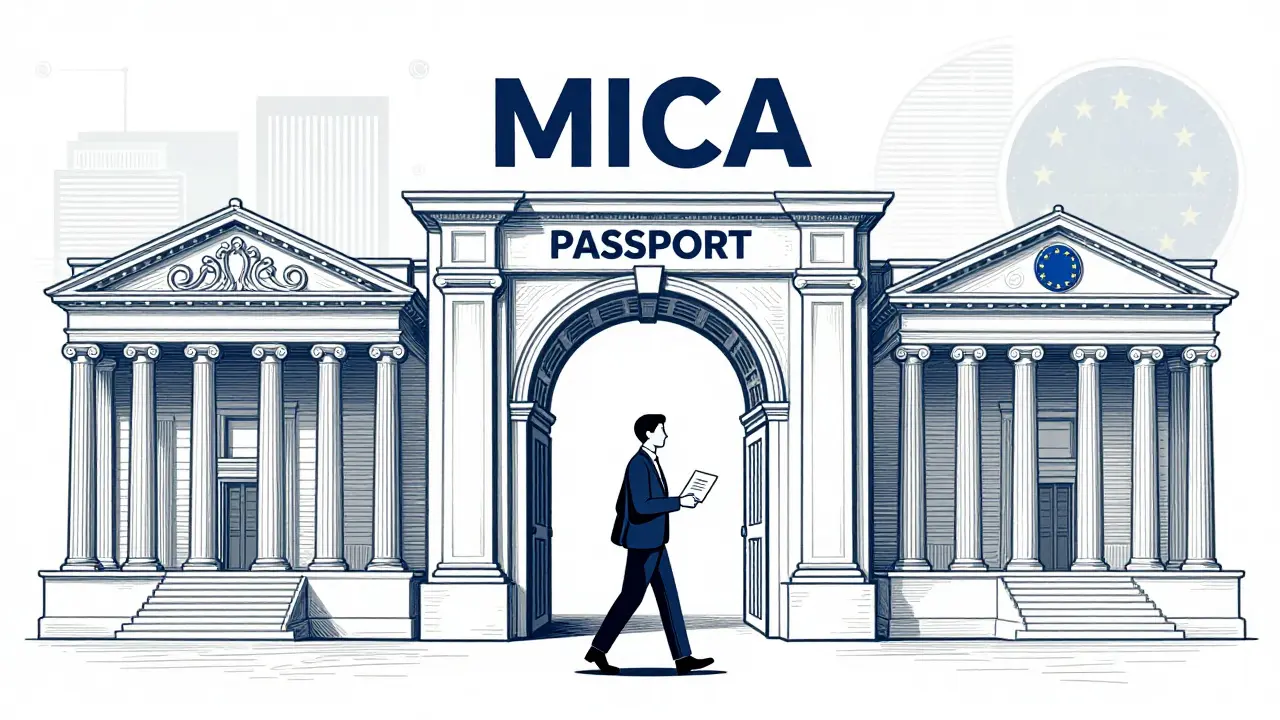
How the EU Crypto Passport Works
The core innovation of MiCA is the passport system. This mechanism allows a Crypto-Asset Service Provider (CASP) authorized in one EU country to operate freely in any other EU member state without needing separate licenses for each location. It mirrors the banking passport that traditional financial institutions have used for decades.
Here is how the process works in practice:
- Home State Authorization: You must first obtain full authorization from the competent supervisory authority in your home member state. This involves proving you meet capital requirements, have robust internal controls, and possess a solid business plan.
Once authorized, you notify your home regulator of your intent to provide services in other specific EU countries. - Passporting Rights: Your home regulator shares this information with the host member states. After a short notification period, you can begin offering services there under the same license.
This system eliminates the need for duplicate licensing fees and redundant compliance setups. However, it does not mean you can ignore local laws. Host countries still enforce their own consumer protection rules and tax regulations. The passport only covers the regulatory authorization to provide crypto services.
Does the MiCA passport allow me to open physical offices in other EU countries?
The passport primarily covers the provision of services remotely or through branches. Opening a physical branch often requires additional registration with the local host authority, though you do not need a new license. Always check with the specific host member state's regulator for branch establishment rules.
Strict Rules for Non-EU Providers
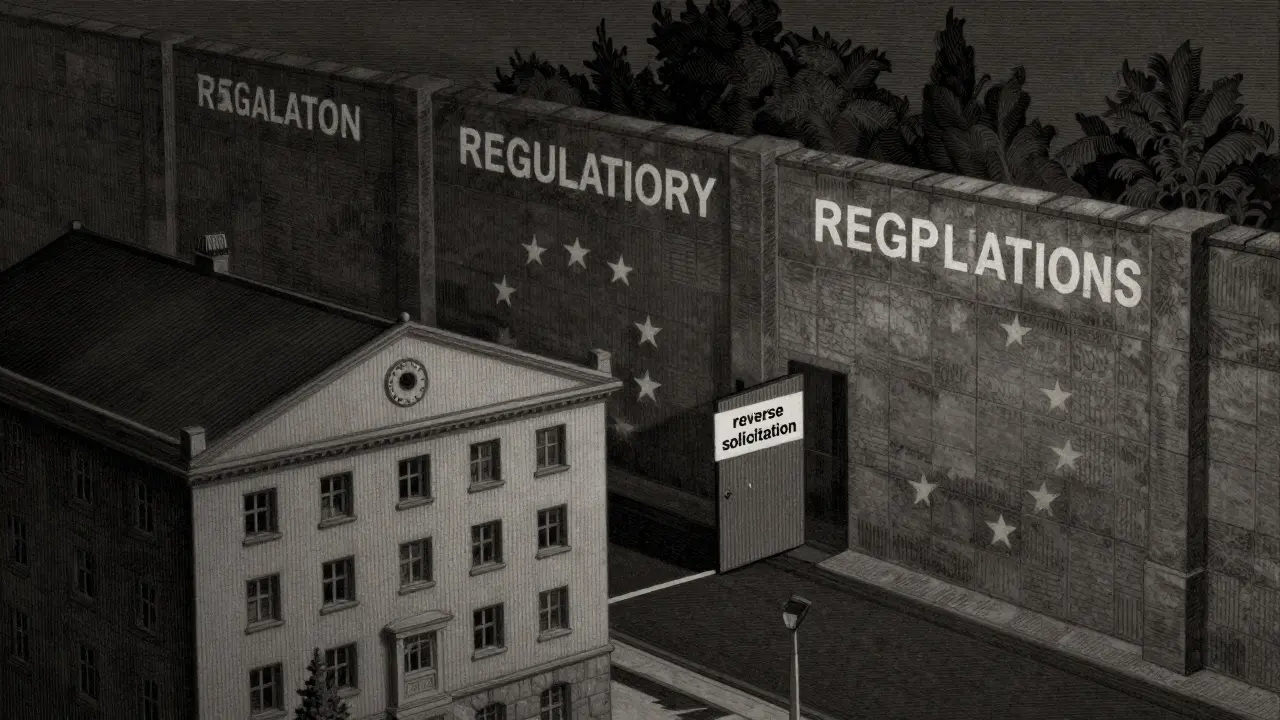
If your company is based outside the European Union, the message from MiCA is clear: you cannot simply serve EU clients from abroad. The regulation imposes significant restrictions on third-country providers to ensure that EU consumers are protected by the same high standards as those served by local firms.
To actively solicit EU clients, promote your services within the EU, or offer cross-border services to EU residents, a non-EU provider must:
- Establish a Legal Entity: You must set up a subsidiary or branch within the EU.
- Obtain Full CASP Authorization: This local entity must apply for and receive a MiCA license from an EU member state’s regulator.
There is a narrow exception known as "reverse solicitation." This applies when an EU client independently contacts you to request services, without any prior marketing or promotional efforts from your side. However, the European Securities and Markets Authority (ESMA) has issued guidelines that make this exception very difficult to rely on. Any form of targeted advertising, website optimization for EU audiences, or proactive outreach can void this protection. National authorities also retain the power to require authorization even in cases they deem suspicious.
In short, if you want to do serious business with EU customers, you need a physical presence and a license inside the EU. Major global exchanges like Binance and Coinbase have already begun restructuring their operations to comply, establishing dedicated EU entities to maintain market access.
Who Needs a License? Understanding CASPs
MiCA defines a Crypto-Asset Service Provider (CASP) broadly. If you perform any of the following activities for third parties, you likely need authorization:
- Exchange Services: Trading crypto-assets for fiat money or other crypto-assets.
- Custody and Administration: Holding private keys or managing wallets on behalf of users.
- Order Execution: Acting as an intermediary to execute trades.
- Operating a Trading Platform: Running a system where multiple buyers and sellers interact.
- Advice and Portfolio Management: Providing investment advice or managing crypto portfolios.
Note that custodial wallet providers face the same strict obligations as centralized exchanges. Even if you only store assets and do not trade them, you are subject to MiCA’s prudential requirements, including maintaining sufficient own funds and insurance policies.
| Entity Type | Authorization Required? | Key Obligations | Cross-Border Access |
|---|---|---|---|
| EU-Based CASP | Yes (Home State) | Capital reserves, AML/KYC, Whitepaper (if issuing tokens) | Full via Passport System |
| Non-EU CASP | Yes (Must establish EU entity) | Same as EU-based + Local incorporation costs | Limited to Reverse Solicitation without EU entity |
| Decentralized Protocol (No Central Actor) | No (Currently) | N/A (Regulation targets legal persons) | Unclear; potential future scrutiny |
| Significant CASP (>15M users) | Yes + ESMA Supervision | Enhanced reporting, stress tests, higher capital buffers | Full via Passport System |
Operational Burdens: Capital, Conduct, and Security
Getting the license is just the first step. Operating under MiCA requires ongoing adherence to rigorous standards. These are designed to protect consumers and ensure market integrity.
Prudential Requirements: CASPs must maintain minimum own funds. The amount depends on the size and risk profile of the business. Larger firms must hold more capital to absorb potential losses. You must also have professional liability insurance to cover errors and omissions.
Client Asset Protection: You must keep client funds and crypto-assets separate from your own corporate assets. This prevents you from using customer money to pay your bills or invest in risky ventures. In the event of bankruptcy, client assets should remain intact and returnable to owners.
Conduct of Business Rules: You must act honestly, fairly, and professionally. This includes providing clear information about risks, fees, and conflicts of interest. Misleading marketing materials are strictly prohibited.
Market Abuse Monitoring: Firms involved in trading must implement systems to detect insider dealing and market manipulation. This requires sophisticated monitoring software and trained compliance staff.
Anti-Money Laundering (AML) Integration
MiCA does not replace existing anti-money laundering laws; it complements them. CASPs must fully comply with the EU Anti-Money Laundering Directive (AMLD). This means implementing robust Customer Due Diligence (CDD) procedures.
You must verify the identity of your clients before allowing transactions. For higher-risk clients, enhanced due diligence is required. You must also monitor transactions for suspicious patterns and report them to the Financial Intelligence Unit (FIU) of your home member state. Failure to comply with AML rules can result in the revocation of your MiCA license, regardless of how well you meet other regulatory requirements.
Stablecoins and Token Issuers
While the focus here is on service providers, token issuers also face cross-border implications. If you issue Asset-Referenced Tokens (ARTs) or E-Money Tokens (EMTs), you need authorization from the European Central Bank (ECB) or a national central bank. These stablecoins benefit from the passport system too, allowing them to be offered across the EU once approved.
Other crypto-assets (like utility tokens) require the publication of a detailed white paper. This document must disclose technical details, rights associated with the token, and risks. While there is no direct "passport" for the token itself, the ability of CASPs to list and trade these tokens across borders depends on the quality and compliance of this white paper.
Implementation Timeline and Transitional Periods
MiCA was implemented in two phases. Phase 1, covering ARTs and EMTs, started on June 30, 2024. Phase 2, covering CASPs and other crypto-assets, became fully applicable on December 30, 2024.
However, member states were allowed transitional periods to adapt their national laws. Some countries chose shorter periods than the standard 18 months. As of early 2025, 15 member states had adopted accelerated timelines. This creates a patchwork of effective dates. If you are launching a service, you must check the specific deadline in your chosen home member state. Operating before the local deadline passes can result in penalties.
What Comes Next?
MiCA positions the EU as a global leader in crypto regulation. Its clarity attracts legitimate businesses but raises barriers for illicit actors. For startups, the compliance costs are high, potentially favoring larger, established players. For non-EU firms, the requirement to localize operations ensures that EU consumers are protected by local courts and regulators.
As ESMA continues to issue technical standards and guidelines, expect further clarification on areas like outsourcing to cloud providers and interoperability between trading platforms. Staying updated with these secondary acts is crucial for long-term compliance.
Can I use reverse solicitation to serve EU clients from the US?
Technically yes, but practically it is very risky. ESMA guidelines define reverse solicitation narrowly. If you have any marketing directed at the EU, including SEO targeting EU keywords, you may violate the rule. Most major firms choose to establish an EU subsidiary instead to avoid legal uncertainty.
What happens if I don't comply with MiCA?
Penalties vary by member state but can include substantial fines, suspension of services, and criminal charges for executives. Regulators have broad powers to intervene if they believe consumer protection is at risk.
Does MiCA regulate decentralized finance (DeFi)?
Currently, MiCA targets legal persons (companies). Purely decentralized protocols with no central administrator fall into a gray area. However, if a centralized entity interacts with the protocol (e.g., providing liquidity or interface services), that entity may be considered a CASP and regulated accordingly.
How much capital do I need to start a CASP?
Minimum own funds requirements vary based on the services provided. For example, custody services typically require higher capital than pure exchange services. Exact figures are defined in delegated acts and depend on your specific business model and risk assessment.
Is MiCA valid in Switzerland or the UK?
No. MiCA is an EU regulation. Switzerland has its own FINMA guidelines, and the UK operates under the Financial Services and Markets Act 2023. Companies serving these regions need separate compliance strategies.


Oh, look at that. Another bureaucratic straitjacket for the digital age 🙄 The EU thinks they can regulate innovation into a coma with their little 'passport' system. It’s not a passport, folks, it’s a leash on a golden retriever that just learned to open doors. They want to turn crypto into another soulless bank branch where you need three forms of ID and a blood sample to buy a sandwich worth of Bitcoin. Typical Brussels overreach, trying to sanitize the wild west until it’s as exciting as watching paint dry in a government office. 🚫📜
The real agenda here is total surveillance integration. MiCA isn't about consumer protection; it's about creating a centralized ledger of every transaction so the deep state can track your liquidity events before you even think about moving funds. The 'passport' is just a data harvesting mechanism disguised as regulatory harmonization. Once they have your KYC data linked to your wallet addresses across all 27 member states, privacy is dead. Long live the Panopticon. 👁️🗨️💸
honestly though if you are running a serious operation you need to understand the home state authorization process because it is not just paperwork it is actual capital requirements and internal controls which is good for stability but bad for small startups who cant afford the compliance overhead right now
i see people complaining about the restrictions but without these rules we would still have scams everywhere and no one would trust the exchanges so maybe it is necessary evil i guess we will have to wait and see how it plays out for smaller players
Let us not pretend this is about safety 🤡 It is about control. The elites want to crush the decentralized dream because it threatens their monopoly on value storage. I say let them try! The more they regulate, the more the underground markets will flourish. We are witnessing the birth of a new financial class war, and the peasants are going to be very unhappy with their new 'passports'. Bring it on, I dare them to ban the blockchain itself 😂🔥
Interesting perspective Ran, but perhaps you are oversimplifying the complexity of cross-border legal frameworks 🧐 While the desire for decentralization is noble, the reality is that without some form of standardized regulation, institutional adoption remains impossible. The question is not whether regulation is good or bad, but whether MiCA strikes the right balance between innovation and security. Time will tell if this framework stifles growth or provides the certainty needed for mass adoption. 🤷♂️
I must express my profound disquietude regarding the implications of this so-called 'passport' system which appears to be a thinly veiled attempt by shadowy cabals to consolidate power under the guise of consumer protection the lack of transparency in the drafting process is deeply troubling and suggests that those in positions of authority are acting with malicious intent towards the common citizenry who merely wish to engage in free exchange without undue interference from authoritarian regimes masquerading as benevolent guardians of financial order
It is important to consider the broader cultural impact of these regulations on how different societies view digital assets and what role they should play in our daily lives because while some may see this as an infringement on personal freedom others might view it as a necessary step towards integrating new technologies into existing social structures in a way that respects both individual rights and collective well-being which requires careful deliberation and dialogue among all stakeholders involved in this evolving landscape
We must remain open to diverse perspectives and strive for solutions that honor the complexity of human experience rather than resorting to simplistic binaries of good versus evil or freedom versus control which often obscure the nuanced realities of governance and economic development in an increasingly interconnected world
Boring stuff. Just give me my coins.
This is helpful information for anyone looking to expand their business into Europe. The clarity provided by MiCA is welcome after years of uncertainty. It simplifies the process for legitimate businesses while keeping bad actors out. Good guide overall.
You are missing the point entirely! The issue is not just about compliance but about the fundamental shift in power dynamics that this regulation represents. By centralizing authorization through home states, the EU is effectively creating gatekeepers who decide who gets to participate in the digital economy. This is a direct threat to the ethos of cryptocurrency which was built on the principle of permissionless innovation. We need to challenge this narrative aggressively!