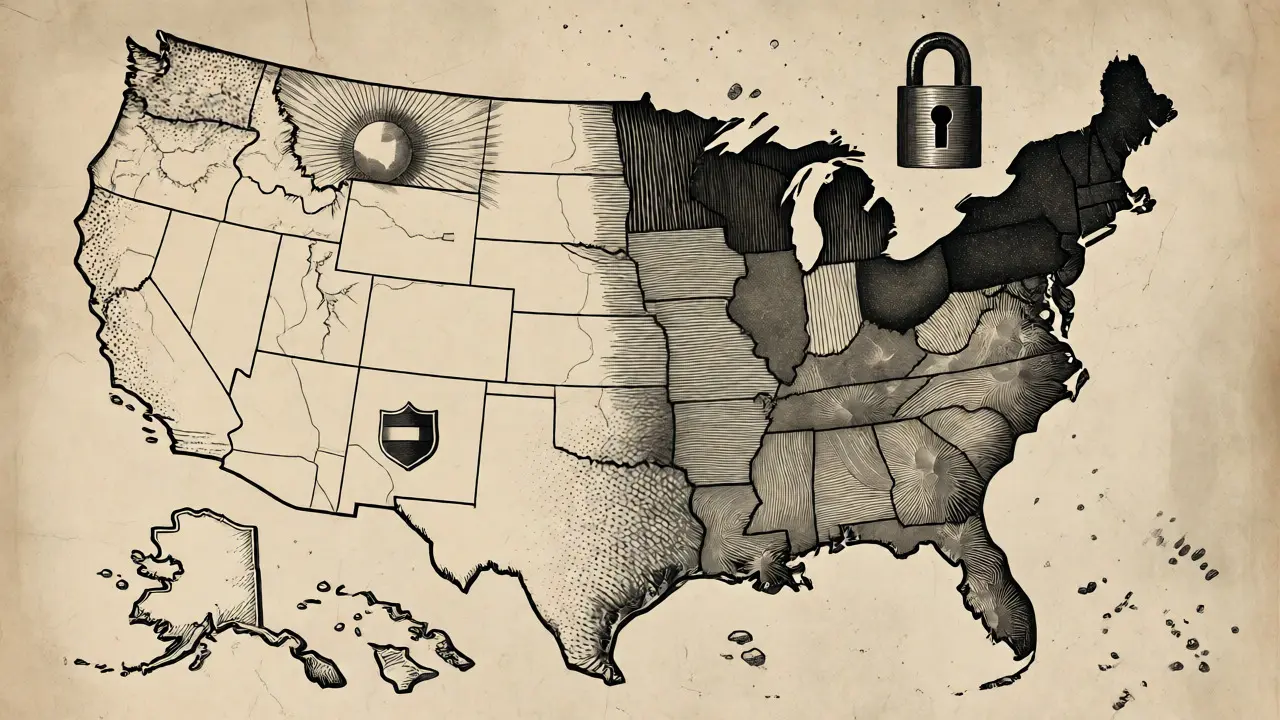
Imagine trying to drive a car where every state has different speed limits, traffic lights, and even definitions of what a "car" is. That’s essentially what it feels like to run a cryptocurrency business in the United States today. While Washington D.C. finally started building a unified road map with recent federal moves, the real day-to-day friction for users and companies still happens at the state level. If you are an investor wondering why your exchange works in Texas but not in New York, or a founder trying to figure out where to set up shop, understanding this patchwork is critical.
The Federal Shift: Why State Rules Still Matter
You might think that with the GENIUS Act signed into law and the CLARITY Act pending in the Senate, the wild west era of crypto regulation is over. It’s getting clearer, sure. The SEC and CFTC even issued a joint statement in late 2025 clarifying that exchanges can list spot crypto products. But here is the catch: federal law sets the floor, not the ceiling. States retain significant power to regulate financial services within their borders. This means that while the federal government says "you can do this," your state attorney general might say "but only if you follow these specific local rules." For most people, the state-level hurdles are the ones that actually block transactions or freeze accounts.
New York: The Gold Standard of Strictness
If there is one state that defines "restrictive," it’s New York. The New York Department of Financial Services (NYDFS) created the BitLicense framework years ago, and it remains the toughest hurdle in the industry. To operate a crypto business here, you don’t just register; you undergo a rigorous vetting process involving capital requirements, anti-money laundering checks, and detailed cybersecurity audits. Many major exchanges simply choose to skip New York entirely because the cost of compliance outweighs the potential profit from its wealthy user base. If you live in NY, expect fewer options on your favorite apps and stricter KYC (Know Your Customer) procedures than anywhere else in the country.
California: Friendly but Complex
Across the country, California takes a different tack. The Department of Financial Protection and Innovation (DFPI) has generally been more accommodating, offering a narrower interpretation of what counts as a regulated money transmitter. This makes California attractive for startups wanting to test new ideas without drowning in paperwork immediately. However, don’t mistake friendliness for absence of rules. California has a robust enforcement arm. The state has cracked down hard on unregistered brokers and deceptive marketing practices. So, while you might find more platforms available in Los Angeles than in Albany, you still need to ensure those platforms are properly registered with the DFPI to avoid sudden shutdowns.
| Feature | New York | California | Texas | Wyoming |
|---|---|---|---|---|
| Primary Regulator | NYDFS | DFPI | Texas Department of Banking | Wyoming Division of Banking |
| Licensing Type | BitLicense (Strict) | Money Transmitter License | Money Transmitter License | Digital Asset Charter |
| Mining Stance | Restrictive | Neutral | Pro-Mining (Energy focus) | Very Pro-Mining |
| Stablecoin Rules | Stringent Reserves | Follows Federal + State | Follows Federal | Specific State Framework |
The Rise of Crypto-Friendly Hubs
Not every state wants to scare away blockchain businesses. Texas and Wyoming have positioned themselves as safe harbors for miners and tech innovators. Texas, with its deregulated energy grid, became a haven for Bitcoin miners after China banned mining operations. The state views crypto mining as a legitimate industrial activity rather than a speculative bubble. Wyoming went even further by passing comprehensive legislation that recognizes digital assets as legal property and allows banks to hold crypto reserves. If you are looking to buy hardware wallets or mine Bitcoin, these states offer tax incentives and regulatory clarity that coastal states often lack.

Enforcement: The Attorney General Factor
Here is something many investors overlook: formal licensing isn’t the only way states regulate. State Attorneys General (AGs) use consumer protection laws to go after crypto scams and misleading promotions. The New York Attorney General is particularly aggressive, having settled cases with major exchanges over undisclosed conflicts of interest. Even if a platform doesn’t require a specific crypto license in your state, it must still comply with general securities and consumer fraud laws. This means that a coin might be technically legal to trade, but if the project team made false promises about returns, your state AG could sue them-and potentially freeze your ability to withdraw funds during litigation.
What This Means for You
So, how do you navigate this mess? First, check your state’s specific status before moving large sums of money. Second, assume that federal clarity will eventually trickle down, but don’t bet your portfolio on it happening overnight. The CBDC Anti-Surveillance State Act, currently moving through Congress, suggests some states are worried about losing control over monetary policy to the Federal Reserve. This tension between state sovereignty and federal standardization will define the next decade of crypto adoption.
For now, treat your location as a key variable in your investment strategy. If you live in a strict state like New York, you might pay higher fees for limited access. If you’re in a friendly state like Wyoming, you might enjoy lower barriers but face less consumer protection infrastructure. There is no perfect jurisdiction, only trade-offs.
Do I need a license to buy crypto for personal use?
Generally, no. Individual consumers buying and holding cryptocurrency for personal investment purposes rarely need a license. Licensing requirements typically apply to businesses that facilitate transactions, custody, or trading for others.
Why does my exchange restrict certain coins in my state?
Exchanges often restrict specific tokens in states with ambiguous securities laws to avoid legal risk. If a state regulator considers a token a security, the exchange may delist it in that state to prevent enforcement actions from the state Attorney General or financial department.
Is the BitLicense still relevant in 2026?
Yes, the BitLicense remains the primary regulatory framework for virtual currency businesses in New York. Despite federal advancements, New York maintains its independent oversight regime, requiring companies to obtain this specific license to operate legally within the state.
How do stablecoins fit into state regulations?
While the GENIUS Act creates federal standards for stablecoin issuers, states can impose additional reserve requirements and auditing standards. Some states require stablecoin providers to hold extra collateral beyond the federal minimum to protect local consumers.
Can I move my crypto holdings to another state to avoid taxes?
Crypto taxes are primarily based on residency and transaction timing, not just physical location. Moving to a state with no income tax (like Texas or Florida) can help, but you must establish bona fide residency. Simply moving assets digitally without changing your domicile won’t change your tax liability.